
The modern business landscape is no longer a collection of isolated departments. The days when the “IT guys” stayed in the basement and the “strategists” sat in the boardroom are officially over. In 2026, technology is the strategy. For undergraduate students entering the workforce, the ability to speak both the language of data and the language of leadership is the single greatest competitive advantage you can possess.
Technology is the engine, but strategic management is the steering wheel. If you have a powerful engine but no direction, you crash; if you have a great navigator but no engine, you go nowhere. This article explores why this duality is essential for your academic journey and your future career, providing a roadmap for students to bridge the gap between technical execution and high-level planning.
The Technical Foundation: Why IT Proficiency is Non-Negotiable
For a business to survive today, it must be digital-first. Whether it’s a local startup or a multinational corporation, the infrastructure relies on complex systems, cloud computing, and secure data pipelines. As a student, mastering these concepts can be overwhelming because the curriculum moves almost as fast as the tech itself.
When you are tasked with analyzing network architectures or database management systems, it’s easy to feel buried under the technical weight. Many students find that seeking it management assignment help is a practical way to grasp these difficult frameworks. By working through expert-guided examples, you learn how to translate abstract code into functional business tools, ensuring your technical foundation is rock solid before you move into the world of decision-making.
The Shift from “Support” to “Core Competency”
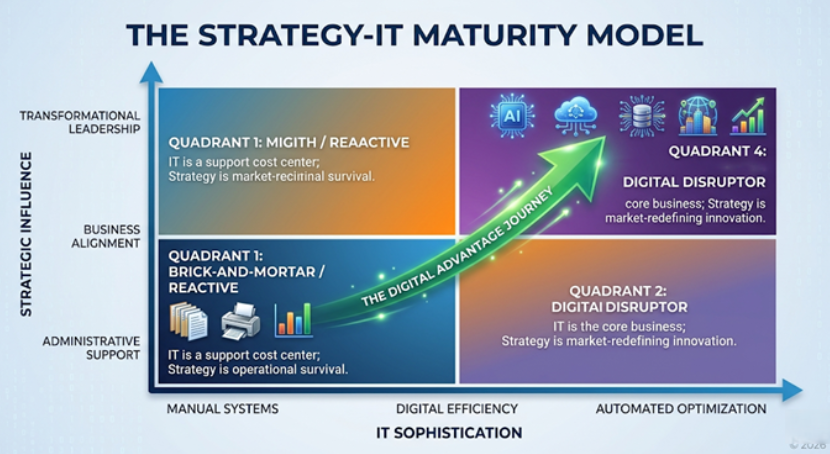
Historically, IT was seen as a support function—something you called when the printer broke. Today, IT is the product. Think about how banking has shifted to FinTech or how retail has shifted to algorithmic e-commerce. If a business student doesn’t understand the limitations and possibilities of technology, they cannot possibly design a viable business model.
Understanding the “how” behind the software allows you to be a better manager. You don’t need to be the world’s best coder, but you must understand how systems integrate. This literacy prevents “technical debt”—the long-term cost of making poor, uneducated technology choices early in a project.
Comparison: IT Specialist vs. Strategic Leader vs. The Hybrid Professional
| Feature | IT Specialist | Strategic Manager | The Hybrid Professional (Target) |
| Primary Focus | Systems & Security | Growth & Competition | Digital Transformation |
| Core Skill | Coding/Architecture | Market Analysis | Data-Driven Leadership |
| Perspective | Internal Infrastructure | External Environment | Holistic Integration |
| 2026 Demand | High | Moderate | Critical |
The Art of Strategic Oversight
Once the technology is in place, the question becomes: What do we do with it? This is where strategy enters the room. Strategy is about making choices—deciding where to play and how to win. It involves looking at the technical data and deciding if a company should pivot, expand, or cut its losses.
For many undergraduates, the transition from “learning facts” to “making high-level decisions” is the hardest part of a degree. This is exactly why specialized resources like Strategic Management Assignment Help from MyAssignmentHelp Services have become so popular; they help students analyze real-world case studies through a professional lens. Learning how to conduct a SWOT analysis or a PESTLE report isn’t just about passing a class—it’s about learning how to predict the future of a brand in a volatile market.
Bridging the Gap: The Rise of “Business Architects”
The most sought-after role in the current economy is the “Business Architect.” These are individuals who can look at a company’s strategic goals and then design the IT infrastructure needed to reach them. They are the translators. They explain to the developers why a feature is needed for the customer, and they explain to the CEO why a certain technology budget is necessary.
If you can demonstrate this hybrid mindset in your internships or your first job, you will bypass the entry-level grind much faster than your peers. Companies are tired of hiring “siloed” employees; they want people who understand the big picture.
How to Build a Hybrid Skillset While in University
You don’t need two separate degrees to master both fields. It starts with your elective choices and how you approach your current assignments.
- Diversify Your Reading: If you are a business major, read tech blogs like Wired or TechCrunch. If you are an IT major, read the Harvard Business Review.
- Learn Data Visualization: Don’t just look at spreadsheets; learn how to present that data in a way that a non-technical manager can understand.
- Case Study Practice: Whenever you study a technical failure (like a major data breach), analyze the strategic failure that led to it. Was it a lack of budget? A lack of leadership?
- Networking: Join student organizations for both entrepreneurship and coding. Seeing how both groups think will widen your perspective.
The Role of AI in Strategy and IT
In 2026, AI is no longer a buzzword; it is a tool. However, AI cannot think strategically, and it cannot understand “human” company culture. It can generate data, but it cannot decide which data matters most for a specific brand’s soul. As a student, your job is to learn how to use AI to handle the mundane technical tasks so you can focus on the high-level strategic decisions that a machine simply cannot make.
Why Employers Value This Dual Mastery
When an employer looks at a resume, they are looking for “risk mitigation.” A student who understands IT and Strategy is a low-risk hire because they aren’t going to make “dumb” technical mistakes or “blind” strategic ones. You become a bridge-builder within the company, helping different teams collaborate more effectively. This leads to higher efficiency, less wasted capital, and faster innovation.
Conclusion: Your Roadmap to the Top
The world is getting more complex, not less. The separation between “digital” and “physical” business has vanished. By choosing to master both Information Technology and Strategic Management, you are effectively “future-proofing” your career. You are moving beyond being a specialized cog in a machine to becoming the person who understands how the whole machine works. Focus on the details, but never lose sight of the horizon. Your future self will thank you for the extra effort you put into bridging these two worlds today.
Frequently Asked Questions (FAQ)
Q.1. Is it harder to learn IT or Strategic Management?
Ans: It depends on your natural leanings. IT is more objective and logic-based, while Strategy is more subjective and requires intuition. However, mastering the connection between them is the real challenge and the most rewarding skill.
Q.2. Do I need to be a pro at coding to understand IT for business?
Ans: No. You don’t need to be a software engineer, but you should understand “Systems Thinking.” You should know how data flows from a user’s click to a company’s database and eventually into a financial report.
Q.3. Why do students use assignment help for these subjects?
Ans: These subjects are often dense and evolve rapidly. Professionals provide a “real-world” perspective that textbooks sometimes lack, helping students see how theory is applied in actual 2026 business environments.
Q.4. Can I get a job in strategy right after graduation?
Ans: Most strategy roles require some experience, but by showing a strong understanding of IT, you can land “Analyst” roles that serve as a direct pipeline into senior strategy positions.
Q.5. How does MyAssignmentHelp assist with these complex topics?
Ans: They provide structured guidance on complex academic tasks, ensuring that students don’t just complete the work, but actually understand the underlying principles of both technical systems and business management.
About The Author
I am Min Seow, an academic consultant and lead content strategist at MyAssignmentHelp, where I specialize in bridging the gap between complex technical theory and practical business application. With a background rooted in digital transformation and organizational behavior, I dedicate my expertise to helping students navigate the evolving demands of modern higher education.