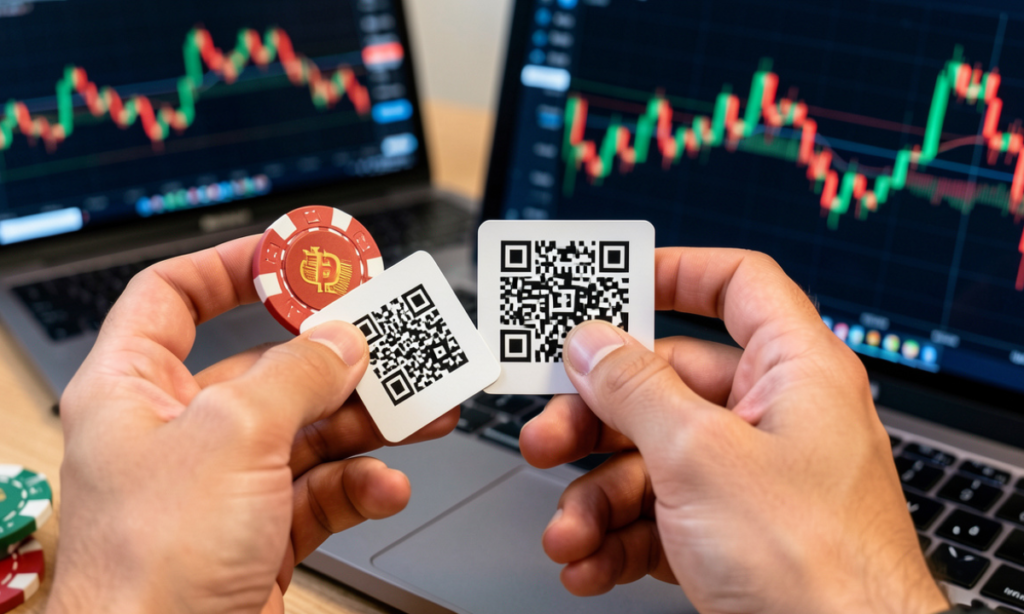

Risk has always been central to poker. Not reckless risk — calculated risk. The game rewards players who understand probabilities, manage exposure, and stay emotionally neutral in volatile moments. Interestingly, cryptocurrency operates within a similar framework. Markets fluctuate, sentiment shifts quickly, and long-term positioning often matters more than short-term noise.
When these two environments intersect, the result is not just a payment update. It is the emergence of a new risk culture inside online gaming.
Poker’s Relationship With Uncertainty
Poker differs from most casino games because uncertainty is not purely random. Players influence outcomes through strategy, reading behavior, and disciplined bankroll allocation. Over time, skill reduces variance.
This mindset translates well into digital finance. Crypto users are accustomed to price swings, market cycles, and strategic entry and exit points. The psychological overlap between poker players and crypto participants is stronger than it might initially appear.
Crypto poker platforms operate at that intersection — combining strategic gameplay with decentralized financial rails.
The Evolution of the Online Casino Environment
The broader online casino industry has expanded far beyond digital replicas of slot machines and roulette tables. Today’s platforms are complex ecosystems with live dealers, global tournaments, affiliate networks, and multi-currency wallets.
Financial flexibility has become a competitive factor. Players evaluate not only game variety but also how efficiently they can move capital.
Within crypto poker environments, cryptocurrency becomes part of that evaluation. It offers an additional method of transferring value in a space where speed and accessibility matter.
ACR Poker and Structured Adaptation
ACR Poker integrates cryptocurrency within a structured competitive environment. The platform remains focused on tournaments, player liquidity, and established poker formats. Crypto exists as part of the transaction ecosystem rather than redefining the brand.
This measured integration signals stability. Instead of chasing short-term hype around digital assets, the platform incorporates them as a parallel option.
From a business standpoint, diversification of payment channels reduces dependency on any single financial pipeline. From a player standpoint, it expands choice.
A Different Type of Financial Exposure
Using cryptocurrency in poker subtly changes how players perceive exposure. Traditional deposits feel static — a fixed amount transferred from a bank. Crypto deposits may carry market-driven variability outside the poker table itself.
This layered exposure can influence decision-making, even if indirectly. A player might consider both table dynamics and broader asset positioning when managing funds.
However, the core game mechanics remain unchanged. The cards do not respond to Bitcoin’s market movement. Skill, probability, and discipline still determine long-term outcomes.
Community, Identity, and Digital Assets
Cryptocurrency has fostered its own global community culture — one built around decentralization, autonomy, and digital ownership. Poker, similarly, has a long-standing culture rooted in independence and calculated self-reliance.
When crypto integrates into poker platforms, these cultures overlap. Players who already manage digital wallets and monitor blockchain transactions may feel aligned with platforms that recognize that financial behavior.
ACR Poker’s inclusion of crypto functionality reflects responsiveness to this evolving player identity without abandoning traditional users.
Regulation and Responsibility
As digital assets expand into gaming, regulatory frameworks continue to evolve. Platforms must balance innovation with compliance, ensuring that identity verification, anti-money laundering protocols, and transaction monitoring remain robust.
Crypto integration does not eliminate responsibility. If anything, it increases the need for structured oversight.
The long-term sustainability of crypto poker depends not on speed alone, but on governance, transparency, and operational discipline.
A Broader Financial Shift
The integration of cryptocurrency into online poker reflects a wider transition in digital finance. Consumers increasingly expect payment systems to be flexible, border-aware, and accessible outside conventional banking hours.
Gaming platforms, as high-frequency transaction environments, often adopt new financial technologies earlier than other industries. Crypto poker is part of that adoption curve.
It signals normalization rather than disruption.
Conclusion
Crypto poker represents the merging of two risk-based ecosystems: strategic gameplay and decentralized finance. Both demand patience, emotional control, and long-term thinking.
Platforms like ACR Poker demonstrate how cryptocurrency can be incorporated responsibly — as an additional financial rail supporting competitive structures.
The shift is not about redefining poker. It is about acknowledging that digital finance is evolving, and online gaming ecosystems evolve with it. As risk culture matures across both domains, their intersection will likely become less novel and more foundational within the digital economy.