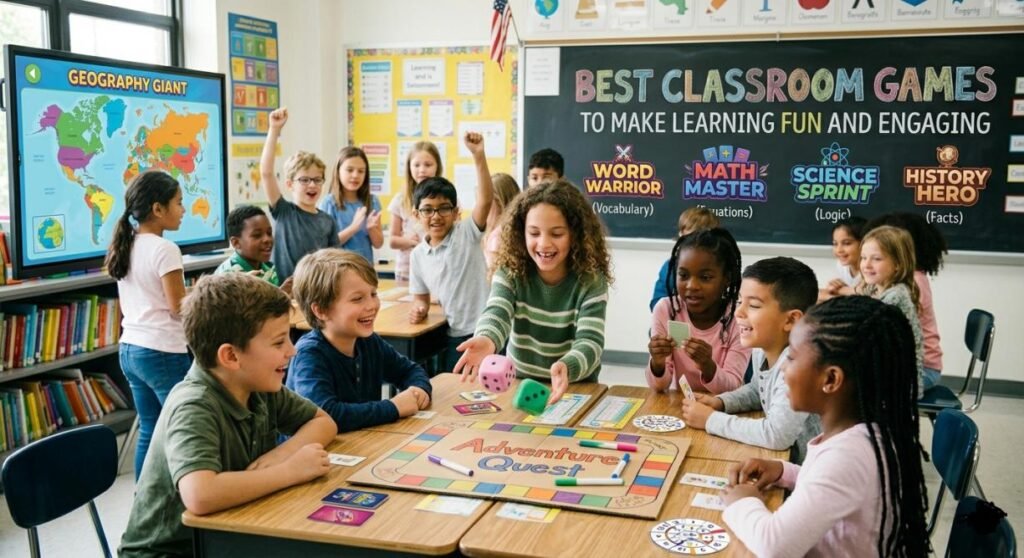

In modern education, keeping students engaged is one of the biggest challenges for teachers. Traditional lecture-based teaching often leads to boredom, distraction, and low participation. This is where ClassroomGames play a powerful role in transforming the learning environment.
Classroom games are structured activities designed to combine education with fun. Instead of only listening and memorizing, students actively participate, interact, and learn through experience. When learning becomes enjoyable, students naturally become more curious and motivated.
Learning should not feel like a burden. When students enjoy the process, they understand concepts better and remember them for a longer time. It creates that bridge between education and enjoyment by turning lessons into interactive experiences.
These games also help teachers manage the classroom more effectively. Students stay focused, participate actively, and develop a positive attitude toward learning. As a result, both teaching and learning become more productive.
Why Classroom Games Are Important in Modern Education
Modern education is shifting from memorization-based learning to skill-based and activity-based learning. In this approach, ClassroomGames are extremely important because they encourage students to take part in the learning process instead of being passive listeners.
One of the biggest advantages of classroom games is that they promote active learning. Students are not just receiving information; they are using it, applying it, and interacting with it. This makes learning more meaningful and long-lasting.
Classroomgames also improve memory and understanding. When students learn through activities, they are more likely to remember concepts because they are associated with real actions and experiences. This is much more effective than rote learning.
Another important benefit is teamwork development. Many require students to work in groups, share ideas, and solve problems together. This helps them build communication skills and learn how to cooperate with others.
Finally, classroom games reduce boredom in the classroom. Long lectures can make students lose interest quickly, but interactive activities keep the environment lively and engaging.
Benefits of Using Classroom Games in Learning
Using ClassroomGames in education provides multiple benefits that improve both teaching quality and student performance.
One major benefit is better student participation. Even shy or less confident students become more active when games are introduced. They feel more comfortable expressing themselves in a fun environment.
Another benefit is increased attention span. Games naturally capture student interest, helping them focus on the lesson for a longer time without getting distracted.
Classroom games also create a stress-free learning environment. Instead of feeling pressured by exams or grades, students learn in a relaxed and enjoyable way. This reduces anxiety and improves performance.
Additionally, it improves teacher-student interaction. Teachers are able to connect with students in a more friendly and engaging manner. This builds trust and improves classroom dynamics.
Best Classroom Games for Students
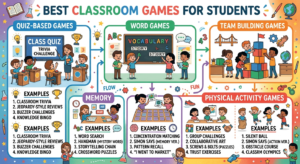
There are many types of ClassroomGames that can be used depending on the subject, age group, and learning goal.
1. Quiz-Based Games
Quiz-based games are one of the most effective learning activities. They are simple to organize and can be used in almost any subject.
Quick question-and-answer competitions help students revise lessons in an exciting way. Teachers can divide the class into teams and ask questions related to the topic being taught. Students respond quickly, which helps improve recall ability.
Team quiz challenges also encourage collaboration. Students discuss answers within their groups before responding, which improves understanding and teamwork.
2. Word Games
Word games are especially useful in language learning. They help students improve vocabulary, spelling, and communication skills.
Vocabulary-building games encourage students to learn new words in a fun and interactive way. Teachers can ask students to form sentences or find synonyms and antonyms.
Spelling competitions are another effective ClassroomGames activity. They improve attention to detail and strengthen language accuracy.
3. Memory Games
Memory games are designed to improve concentration and cognitive skills. They are simple but very effective for students of all ages.
Card matching activities are commonly used in classrooms. Students need to remember the position of cards and match correct pairs, which improves memory retention.
Picture recall games are another great activity. Students observe images for a short time and then answer questions about them. This enhances observation and focus.
4. Team Building Games
Team-based ClassroomGames help students develop cooperation and problem-solving skills.
Group problem-solving tasks encourage students to work together to find solutions. This improves communication and critical thinking.
Classroom challenges where teams compete against each other also build a sense of responsibility and teamwork. Students learn how to share ideas and respect different opinions.
5. Physical Activity Games
Physical games combine movement with learning, making them ideal for active classrooms.
Educational relay races involve students answering questions while moving between points in the classroom. This keeps energy levels high and learning active.
Movement-based learning games allow students to act out answers or concepts. This is especially helpful for younger learners who understand better through physical activity.
Classroom Games for Different Age Groups
Different age groups require different types of ClassroomGames to match their learning abilities.
For primary students, simple and colorful games work best. These include memory games, matching activities, and basic quizzes.
Middle school students benefit more from strategy-based and teamwork games. They enjoy challenges that require thinking and collaboration.
High school students need more advanced activities such as debates, problem-solving games, and competitive quizzes that improve critical thinking skills.
How Teachers Can Easily Include Games in Lessons
Teachers do not need complex planning to use ClassroomGames effectively. Even small activities can make a big difference in student engagement.
One simple method is to prepare short games as warm-up activities. This helps students become mentally active before the main lesson begins.
Teachers can also include games during revision sessions. Instead of traditional reviewing methods, games make revision more interesting and effective.
It is also important to balance fun with learning. Every game should have a clear learning objective so that students gain educational value along with enjoyment.
Tips for Making Classroom Games More Effective
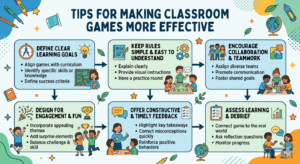
To get the best results from ClassroomGames, teachers should follow some simple but important tips.
Rules should always be kept simple so that students can understand the game quickly without confusion.
Teachers should encourage participation from all students, not just the most active ones. This ensures equal learning opportunities.
It is also important to reward participation and effort, not just winning. This motivates all students to take part without fear of failure.
Finally, games should always be connected to the lesson topic. This ensures that students are learning while having fun, rather than treating the activity as separate entertainment.
Final Verdict
ClassroomGames are one of the most effective tools in modern education. They transform traditional classrooms into interactive learning spaces where students actively participate, enjoy the process, and learn better.
By using games in education, teachers can improve student engagement, increase focus, and create a positive learning environment. Students not only understand concepts more clearly but also develop important life skills such as teamwork, communication, and problem-solving.