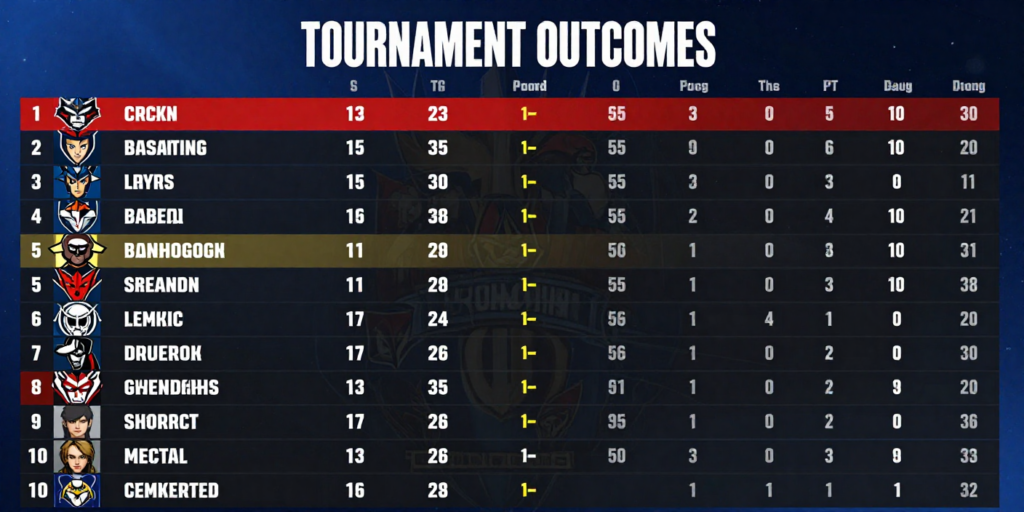

Data analysis in esports has long ceased to be just a hobby for fans and has evolved into a full-fledged scientific discipline. When I look at the bracket of another major tournament, I see more than just team names; I see vast arrays of numbers that hide the future outcome. For experts, forecasting is the process of separating random noise from real patterns, where every frag, every death, and even the economy of a single round matters. My approach to this issue is built on a deep dive into metrics that an average viewer might simply overlook in the heat of battle. In this article, I will share my vision of exactly how professionals dissect statistics to predict the name of the champion.
Current Form and Individual Performance Analysis
I always look at player stability within a specific patch. Often, teams dominate for a month and then sharply decline due to key participants losing their edge or failing to adapt to balance changes. In my opinion, yearly statistics are often misleading, which is why experts focus on the short-term window of recent matches. This specific period reflects the actual firepower and the squads readiness to fight equally strong opponents here and now.
In tactical shooters, analysts integrate metrics such as ADR and entry frag percentages into their calculations. For a more accurate assessment of win probability, cs2 predictions are often used, taking into account the current 2.0 ratings of snipers from Vitality or G2 over their latest series. If the leaders show a slump, it serves as a signal to adjust the forecast for the entire tournament. Such data helps determine whether a team is at its peak or if their successes were merely a fluke. I also evaluate performance in high-pressure situations, as individual play in decisive rounds often determines the map&s outcome.
Beyond the numbers, it is crucial to consider each player’s role within the team structure. A drop in one participant’s personal stats might be a result of the team shifting resources to another teammate. I analyze the effectiveness of support players, as even a talented shooter cannot reach their full potential without high-quality assistance. If the system-based gameplay falters and victories are achieved only through the incredible efforts of individuals, I will never label such a team as a favorite.
Mappool and Strategic Flexibility
Map selection is a game of chess that begins even before the first shot is fired. I believe that half of the success is determined here, as every team has "uncomfortable" opponents due to their mappool. For instance, even with an 80% win rate on Ancient, a team loses its edge if the opponent consistently bans that location. Experts analyze more than just dry win percentages; they look at resource distribution, the frequency of force buys, defensive efficiency, and adaptation to unconventional boosts.
Mappool depth determines a team’s survivability in the playoffs. I keep a close eye on how top-tier organizations like FaZe or NAVI prepare their "permabans." If a team is forced to waste a ban on a map they simply haven’t prepared, it gives the opponent massive leverage during the veto process. I often study match VODs to find hidden preparations on ”second- tier” maps, such as Anubis or Nuke, which frequently become the deciding factor in bo3 formats.
Strategic flexibility is shown in the ability to change pace right in the middle of a game. Experts value squads capable of transitioning from slow utility executes to fast hits when standard tactics stop working. I am convinced that predicting a winner is impossible without understanding how players react to the enemy’s economy. The ability to win with a weak buy against an opponent’s full buy is what separates a future champion from a solid mid-tier team.
Head-to-Head History and Psychology
Numbers are important, but one must not forget the "kryptonite" factor, where an underdog
historically beats the favorite. I notice how top-tier organizations lose their way when facing an aggressive style that breaks their familiar timings. Look at the matches between G2 and
NAVI: even during periods when one team was in crisis, their encounters defied the logic of the rankings. Analysts always consider this background and the player’s ability to keep their cool in clutches, where psychology outweighs technique.
There is a concept known as a "stylistic barrier," where one team’s academic playstyle perfectly feeds into another’s chaotic outbursts. I am convinced that you need to look beyond the win rate and observe how captains react to pressure. If an opponent forces early duels and disrupts set strategies, some leaders begin to make mistakes in their shot-calling. This turns the match into a battle of characters, where current world rankings cease to matter.
Resilience in front of a live audience is a separate metric that experts try to quantify. I highlight squads that "grow" from the crowd’s energy versus those who tilt after the first setback. Match history often reveals mental blocks: having lost three finals in a row to the same opponent, a team enters the fourth with a heavy burden of doubt. Predicting an outcome is practically impossible without accounting for this emotional backdrop.
The Influence of Drafts and Meta in MOBAs
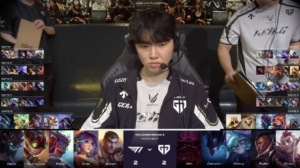
In League of Legends, predicting drafts and understanding the meta is paramount. I am convinced that even the best rosters can lose during champion selection if the coaching staff misjudges priorities. Experts track high-priority picks in the LCK or LPL and see how teams adapt them. In 2026, this is clearly seen in the rapid shifts between aggressive junglers and early-game objective control.
The current meta demands maximum autonomy from marksmen. If a team relies on an ADC who cannot survive without constant support, they risk collapsing against aggressive jungle and mid-lane pressure. I often see this in matches against top Chinese teams like Bilibili Gaming, who ruthlessly punish lane passivity. I always evaluate draft flexibility: can the team shift their strategy if their primary carry is countered in the final phase?
Finally, understanding item power spikes and gold timings is essential. A difference of a few hundred gold on a key item can swing a fight for Baron or Dragon. I analyze resource distribution: if a squad effectively "funnels" their mid-laner over less critical roles, their winprobability rises significantly. This ability to adapt to specific damage and survivability numbers makes forecasting LoL both complex and thrilling.
Conclusion
Forecasting tournament outcomes is an endless job with variables where there is no room for blind faith in favorites. Only cold calculation, the analysis of hundreds of hours of match VODs, and the ability to interpret dry statistics allow for high accuracy. Of course, in esports, there is always room for sensations and incredible comebacks, but that is exactly where its beauty lies. If you are interested in how to apply this knowledge in practice, I can break down a specific upcoming match for you or create a detailed guide on mappool analysis — which will you choose?