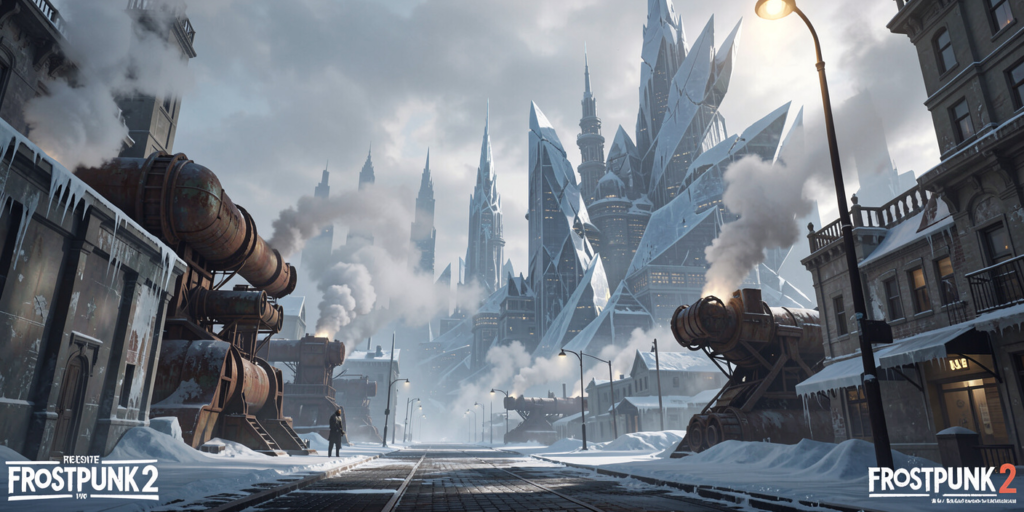

Frostpunk 2 is the highly anticipated sequel to the original Frostpunk, developed by Polish studio 11 Bit Studios. It expands the survival city‑building formula with deeper mechanics, larger cityscapes, and more strategic complexity. From the moment you start a new game, it feels familiar yet noticeably more ambitious — it’s not just about keeping people alive in extreme cold anymore. Now, you’re managing a society and its resources on a much bigger scale, which gives the experience a broader and more strategic feel overall.
Story and Setting in Frostpunk2: What You Need to Know
It takes place thirty years after the catastrophic “Great Storm” that set the events of the first game into motion. In this era, civilization is slowly rebuilding and transitioning from desperate survival to industrial development. You step into the role of a leader tasked with guiding a large, growing society through political tensions, resource challenges, and ideological conflict. The story emphasizes societal evolution, where choices have far‑reaching effects on your citizens’ morale, loyalty, and future.
Core Gameplay Mechanics of Frostpunk 2
At its core, it expands on the original’s formula of survival city building. You are still responsible for city planning, resource management, and keeping people alive in a harsh, frozen world. However, the sequel introduces larger cities and more interconnected systems. Instead of individual structures dominating gameplay, whole districts function together to produce heat, shelter, food, and materials. Managing complex supply chains of coal, oil, and steam becomes crucial to survival. It also adds a new political layer — factions with distinct agendas influence key decisions, shifting the game from survival only to social simulation as well.
City Building and Resource Management in Frostpunk 2
City building in it is more strategic and large‑scale than in the first game. You design city districts on a hex grid, giving you more strategic freedom but also more responsibility. Resources must be carefully balanced: heat and food keep citizens alive, while building materials and fuel are required to grow and maintain your city. Efficient planning and prioritization are crucial; as your population grows into the thousands, even small miscalculations can lead to a crisis. This emphasis on planning adds depth and encourages multiple playthroughs to refine your approach.
Frostpunk2 Laws and Moral Choices Explained
One of its most engaging new features is its politics system. Instead of simply enacting laws, you interact with different factions that influence the direction of your society. Each faction has its own values and demands, which means your decisions affect morale, productivity, and long‑term outcomes. These elements give the game a moral complexity absent in many other strategy games — choices are rarely “good” or “bad,” but rather situational, with trade‑offs that impact growth, stability, and citizen happiness.
Graphics, Sound, and Visuals in Frostpunk 2
It brings graphical improvements over its predecessor, offering richer visuals, detailed environments, and more atmospheric lighting. The frozen landscape is beautifully rendered, with icy winds, smoke from factories, and bustling districts creating a vivid backdrop. Sound design complements the visuals, with ambient audio that enhances immersion and purposeful musical cues that highlight tense or pivotal moments in the game. The art direction maintains the bleak, steampunk‑inspired aesthetic fans expect, while expanding it to feel grander and more dynamic.
Difficulty Level and Replayability of Frostpunk2
Frostpunk 2 is challenging, but in a thoughtful way. Rather than relying solely on harsh weather mechanics, difficulty now arises from balancing people’s needs, managing political factions, and maintaining an expanding economy. For players familiar with strategic thinking and long‑term planning, this depth makes the game engaging and rewarding. The addition of sandbox options further increases replay value, allowing you to set your own starting conditions and experiment with different approaches. Each playthrough can feel unique, pushing you to adapt your strategies continually.
Frostpunk 2 vs Frostpunk 1: What’s New and Improved
Compared to the original Frostpunk, the sequel delivers significant upgrades. Cities are larger and more complex, with district systems replacing individual structures. The addition of political factions and council dynamics deepens the experience beyond pure survival. The overall pace shifts from short bursts of crisis management to more deliberate, sustained societal development. Some players appreciate this evolution, finding it makes Frostpunk 2 feel like a standalone strategic experience rather than just an expanded remake. Others note that the emotional intensity of the original’s smaller‑scale survival focus is slightly reduced, but the added depth is widely seen as a worthy trade‑off.
Pros and Cons of Playing Frostpunk2
| Pros | Cons |
| Much larger scale and deeper strategic options than the first game | It can be overwhelming for beginners due to its depth |
| Complex resource and political systems that add replay value | Some players miss the tighter emotional focus of the first game |
| Rich visuals and atmospheric sound design | Planning and micromanagement demands higher attention |
| More freedom in city planning and long‑term growth | Can feel less emotionally intense compared to the original game |
Final Verdict: Is Frostpunk2 Worth Your Time?
Frostpunk 2 successfully evolves the survival city‑building genre by adding new layers of strategy, politics, and societal management. If you enjoy thoughtful, challenging games that reward careful planning and moral choice‑making, it is absolutely worth playing. While its depth may be intimidating to newcomers, it offers an engaging experience for strategy fans and a solid continuation of the Frostpunk universe.
FAQs
What makes Frostpunk 2 different from the first game?
It offers a much larger scale and deeper strategic options, giving players more control over city planning and long-term growth.
Are the complex resource and political systems difficult to manage?
While these systems add depth and replay value, they can be overwhelming for beginners who are new to the game.
How are the graphics and sound in it?
The game features rich visuals and atmospheric sound design, enhancing the immersive survival experience.
Is Frostpunk 2 suitable for casual players?
The planning and micromanagement demands can be high, making it more suitable for players who enjoy strategic challenges.
Does it have the same emotional impact as the first game?
Some players feel it can be less emotionally intense, but it balances this with larger-scale strategy and complex societal systems.