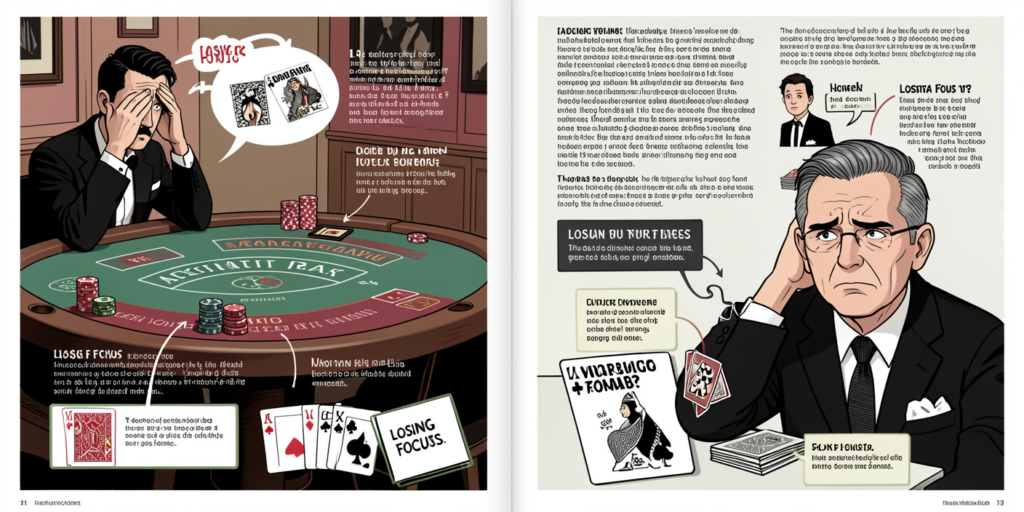

Tilt is the invisible shift from deliberate baccarat decisions to emotionally driven reactions after a trigger—usually a painful loss or a run of bad results. Once tilt starts, players abandon their usual standards, bet sizes change without logic, and the goal quietly flips from playing well to “fixing” the feeling of losing. Understanding what tilt is, how it shows up in baccarat, and how to check yourself in real time is essential if you want your results to reflect strategy instead of mood.
What “Tilt” Really Means in a Card Game Context
Originally a poker term, tilt describes a state of emotional confusion or frustration in which a player shifts to a suboptimal, impulsive style of play. Research on online card games shows that tilt episodes involve cognitive and emotional dysregulation: reasoning ability drops, irrational beliefs rise, and the player loses control over their choices. The more often this state appears during gambling, the higher the risk of serious bankroll damage and, over time, problematic gambling behavior.
Why Tilt Matters Specifically for Baccarat
Baccarat’s structure—fast hands, simple decisions, and short intervals between bets—gives tilt the perfect environment to spread. When each hand resolves in seconds, a frustrated player can fire off many poorly considered bets before realizing their mindset has shifted. Because outcomes depend heavily on variance, short bursts of unfortunate results can feel deeply personal, pushing players to chase losses or “punish” the shoe, which amplifies tilt’s financial impact.
Triggers That Push a Baccarat Player Into Tilt
Tilt usually starts with an event that feels unfair, humiliating, or out of proportion to expectations. In baccarat, these moments include losing several units in a row, seeing a high wager lose on a narrow margin, or watching a pattern you trusted flip the moment you increase your stake. When the brain interprets these events as threats, stress responses surge, attention narrows, and the urge to regain control quickly—or to prove something—begins to override rational evaluation.
To understand how this process unfolds, it helps to separate common tilt triggers into categories.
| Tilt Trigger Type | Example Situation in Baccarat | Likely Emotional Response |
| Frustration tilt | Multiple small losses eroding earlier gains. | Irritation, impatience, urge to “make it back fast.” |
| Anger tilt | Losing a big hand you felt you “deserved” to win. | Rage, desire to punish the table or “fight back.” |
| Revenge tilt | Fixating on recovering a specific lost amount. | Tunnel vision on one number, ignoring new information. |
| Desperation tilt | Playing with money you cannot afford to lose and going down. | Panic, fear, all‑in thinking. |
| Winner’s tilt | Rapid early wins leading to overconfidence. | Reckless bets, belief you cannot lose. |
Recognizing which trigger type you respond to most strongly gives you an early diagnostic tool: when that pattern appears, you can assume tilt risk is rising even before your play fully deteriorates. The key is not to eliminate emotional reactions—which is unrealistic—but to translate them into clear signals that it is time to pause or downshift.
How Tilt Shows Up in Your Decisions, Not Just Your Feelings
Tilt is often described emotionally, but its most important characteristic is behavioral: how you actually start playing. When tilted, players move away from consistent bet sizing and calmly applied rules toward an erratic style dominated by short-term relief seeking. They may still think they are “in control,” but a close look at decisions reveals a sequence driven less by probability and more by the desire to escape discomfort.
Mechanism: From Emotional Spike to Suboptimal Play
Neurophysiologically, a spike of frustration or anger activates stress responses similar to fight-or-flight, narrowing cognitive bandwidth. In this narrowed state, the brain prioritizes actions that promise immediate emotional relief over long-term outcomes, which is why impulsive bets suddenly feel more attractive than careful ones. Over repeated episodes, this mechanism wires an association between losing and aggressive recovery attempts, making future tilt easier to trigger and harder to interrupt.
Self-Check: A Practical Tilt Symptom Checklist for Baccarat
Because tilt creeps in gradually, you need a structured way to check whether you are still making decisions in your usual baseline state. One effective approach is to run through a short internal checklist whenever you experience consecutive losses or a strong emotional reaction to a hand. Each “yes” is a sign that your focus has shifted from playing well to trying to regulate your feelings through betting.
Before the checklist itself, it is important to note that the goal is not to diagnose yourself as “good” or “bad,” but to identify the moment when your thinking quality drops below your normal standard. In that moment, acting conservatively—cutting bet size, pausing, or ending the session—protects both bankroll and confidence.
- Have you recently increased your usual bet size purely because you are behind, without any new strategic reason?
- Are you replaying previous losing hands in your mind instead of focusing on the current one?
- Do you feel a sense of urgency, as if you “must” win back a specific amount today?
- Are you shortening your decision time, placing bets more quickly than at the start of the session?
- Have you ignored or modified your original stop‑loss or time limit during this session?
- Do you catch yourself talking about the game in moral terms—“unfair,” “rigged,” “the table owes me”?
- Are you hiding the size of your losses from others or from yourself (for example, avoiding looking at the total)?
If two or more of these apply, it is strong evidence that tilt is already influencing your play. Treating this as a binary switch—“I am now tilted, so my next job is to protect myself, not to win money”—helps you take decisive corrective action rather than debating with yourself while losses accumulate.
How Tilt Shows Up in Your Decisions, Not Just Your Feelings
Tilt is often described emotionally, but its most important characteristic is behavioral: how you actually start playing. When tilted, players move away from consistent bet sizing and calmly applied rules toward an erratic style dominated by short-term relief seeking. They may still think they are “in control,” but a close look at decisions reveals a sequence driven less by probability and more by the desire to escape discomfort.
Mechanism: From Emotional Spike to Suboptimal Play
Neurophysiologically, a spike of frustration or anger activates stress responses similar to fight-or-flight, narrowing cognitive bandwidth. In this narrowed state, the brain prioritizes actions that promise immediate emotional relief over long-term outcomes, which is why impulsive bets suddenly feel more attractive than careful ones. Over repeated episodes, this mechanism wires an association between losing and aggressive recovery attempts, making future tilt easier to trigger and harder to interrupt.
Self-Check: A Practical Tilt Symptom Checklist for Baccarat
Because tilt creeps in gradually, you need a structured way to check whether you are still making decisions in your usual baseline state. One effective approach is to run through a short internal checklist whenever you experience consecutive losses or a strong emotional reaction to a hand. Each “yes” is a sign that your focus has shifted from playing well to trying to regulate your feelings through betting.
Before the checklist itself, it is important to note that the goal is not to diagnose yourself as “good” or “bad,” but to identify the moment when your thinking quality drops below your normal standard. In that moment, acting conservatively—cutting bet size, pausing, or ending the session—protects both bankroll and confidence.
- Have you recently increased your usual bet size purely because you are behind, without any new strategic reason?
- Are you replaying previous losing hands in your mind instead of focusing on the current one?
- Do you feel a sense of urgency, as if you “must” win back a specific amount today?
- Are you shortening your decision time, placing bets more quickly than at the start of the session?
- Have you ignored or modified your original stop‑loss or time limit during this session?
- Do you catch yourself talking about the game in moral terms—“unfair,” “rigged,” “the table owes me”?
- Are you hiding the size of your losses from others or from yourself (for example, avoiding looking at the total)?
If two or more of these apply, it is strong evidence that tilt is already influencing your play. Treating this as a binary switch—“I am now tilted, so my next job is to protect myself, not to win money”—helps you take decisive corrective action rather than debating with yourself while losses accumulate.
Using Environment and Tools to Contain Tilt (Including UFABET)
The environment in which you play can either aggravate or help contain tilt; features that track your behavior over time can be used to impose structure when your emotions surge. When baccarat is played through UFA747, for instance, you can treat the service as a structured betting interface where session histories, stake patterns, and timestamps become feedback data rather than just a record of wins and losses. By reviewing these logs, you can identify exactly when you break your own rules—after how many losing hands, at what hour of the session, or following what stake size—turning vague feelings of “I got carried away” into precise triggers you can plan around. This data-centric approach allows you to pre‑empt tilt by setting automatic loss caps, time‑based reminders, or personal rules that cut off play once your historical danger zones are reached.
Simple Interventions to Interrupt Tilt in the Moment
Once you suspect tilt has started, the priority shifts from strategy optimization to damage control. Evidence from online gambling and gaming contexts suggests that adding deliberate friction—time delays, physical movement, or explicit status checks—reduces impulsivity and restores some cognitive distance. The objective is not to quickly “cool off” so you can immediately resume high‑stakes betting, but to disrupt the feedback loop between stress and rapid decision-making.
Here is a set of practical interventions you can apply during baccarat sessions.
- Enforce a short break rule
If you lose a certain number of hands in a row while feeling emotional, stand up and step away for at least 10 minutes before deciding whether to continue. - Add a mandatory pause before each bet
Use a five‑second countdown or a physical ritual—sitting back, breathing deeply—before placing any wager, especially after a loss. - Speak your numbers out loud
Verbally stating your current balance and total session loss or gain pulls attention back to objective figures rather than emotional narratives. - Reduce stakes or end the session
When you identify tilt, immediately cut bet size to your minimum or commit to closing the session once the current shoe ends. - Link future play to rule compliance
Create a commitment that if you ever break your own bankroll or time rule, you will not play again until the next day.
These steps work because they create distance between impulse and action, forcing your reflective system to come back online. Over repeated sessions, consistently applying them trains your brain to associate tilt signals not with bigger bets, but with protective responses, reducing the severity and frequency of future episodes.
How the Wider casino online Setting Intensifies Tilt Risk
In a broad casino online environment, the design tends to minimize pauses: rapid game cycles, easy balance top‑ups, and one‑click access to new tables all reduce natural friction. This continuous flow makes it harder to notice when you have shifted from thoughtful play to reactive betting, especially if you move between games while chasing a single emotional target, such as “getting back to even.” The very accessibility that makes online gaming convenient therefore also increases the need for self‑installed brakes—session timers, external alarms, or strict rules about not re‑depositing once a daily loss limit is hit.
When players understand tilt and accept that their decision quality is not constant, they are more likely to design their online habits around protection instead of pure entertainment. That might mean planning sessions shorter than they feel necessary, defining in advance which signals will trigger an automatic stop, and viewing adherence to those rules as a success metric separate from profit or loss. Over time, this approach reduces the intensity of tilt episodes because the player expects to act conservatively when stressed, rather than seeing restraint as a punishment.
Summary
Tilt in baccarat is not just a bad mood; it is a measurable drop in decision quality driven by emotional overload after unfavorable outcomes. It appears in faster bets, larger stakes, broken rules, and a narrowed focus on recovering losses rather than making good choices. By learning the triggers, running honest self‑checks, using tools and environments that reveal your patterns, and enforcing simple in‑moment interventions, you turn tilt from a hidden liability into a manageable risk, preserving both your bankroll and your long‑term enjoyment of the game.